


A Comprehensive, Self-Paced Online Painting Course
Learn to see. Strengthen your tools. Build your confidence. Paint anything.
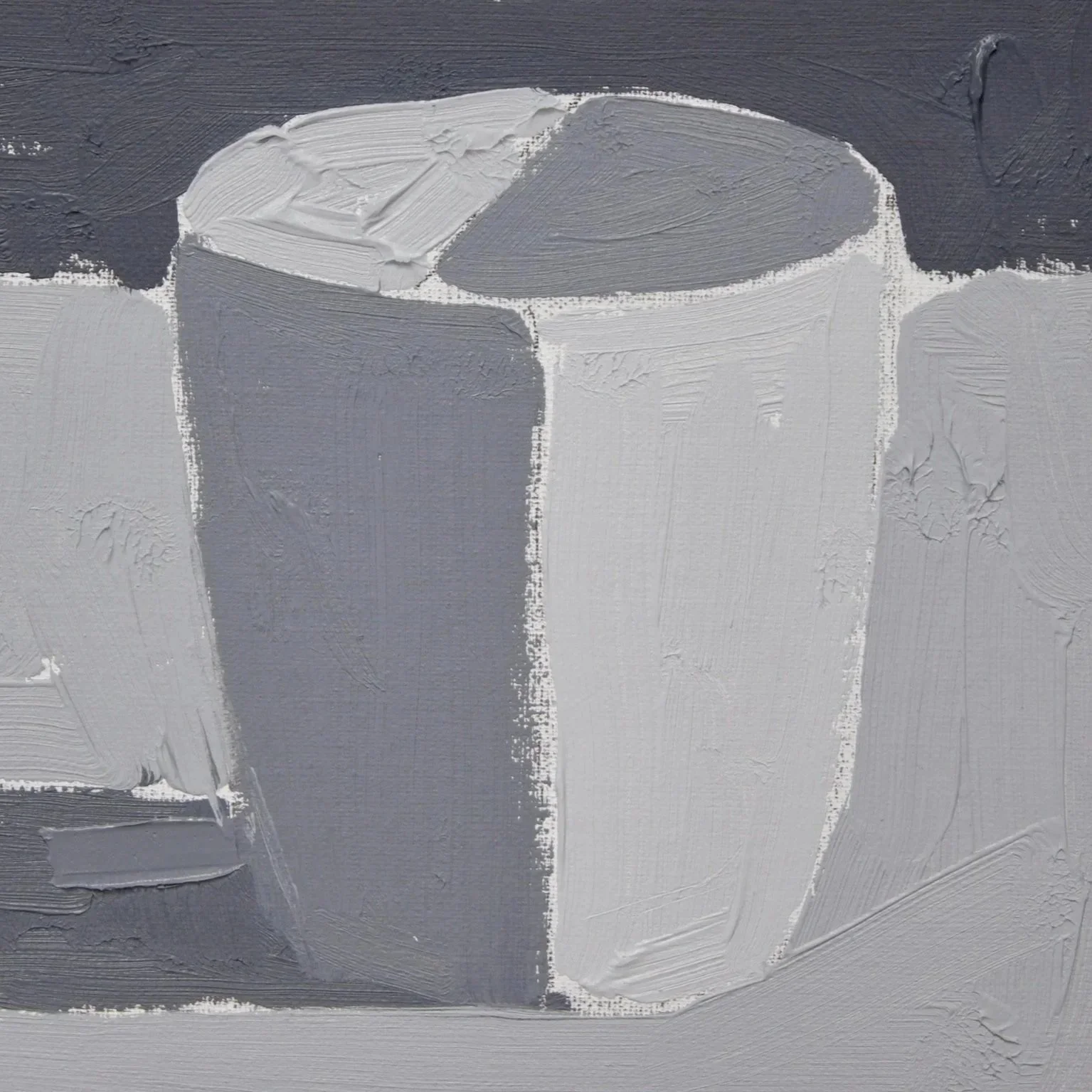
Value Is the Foundation of a Painting
It is easy to become excited about color and overlook one of the most important foundations of painting: value.
Value refers to the range of light to dark and is also a property of color.
As Kami often tells her students, creating the illusion of light relies on achieving accurate values in your paintings.
Value gives color its carrying power.
Underneath every successful painting that represents light and color is a strong structure of value.
In Color Relativity Fundamentals: Value & Form, you’ll begin by developing an understanding of value and learning to work with a nine-point value scale. From there, you’ll study the properties of light and shadow, learning to see and paint accurate value relationships.
With this foundation in place, you’ll advance into form—learning to see and create the illusion of three-dimensional form on a two-dimensional surface.
What You'll Learn
By completing Color Relativity FUNDAMENTALS: Value & Form, you’ll develop a strong foundation in value, light, shadow, and form—learning not only what to look for, but how to see and translate three-dimensional form into paint.
VALUE & FORM
Understanding value: Learn why value is the underlying structure of a painting and essential to creating the illusion of light.
The nine-point value scale: Learn to see, compare, and organize values from light to dark.
Light & shadow: Develop your ability to recognize and separate the light and shadow families on three-dimensional objects.
The two types of halftone: Understand this critical distinction and its role in accurately seeing value, color, and form.
Seeing form: Learn to recognize three-dimensional form through plane changes and shifts in value.
Painting form: Translate what you see into paint to create the illusion of three-dimensional form.
Reflected light: Explore one of the more sophisticated properties of light and understand its role within the shadow family.
Learning to See Form
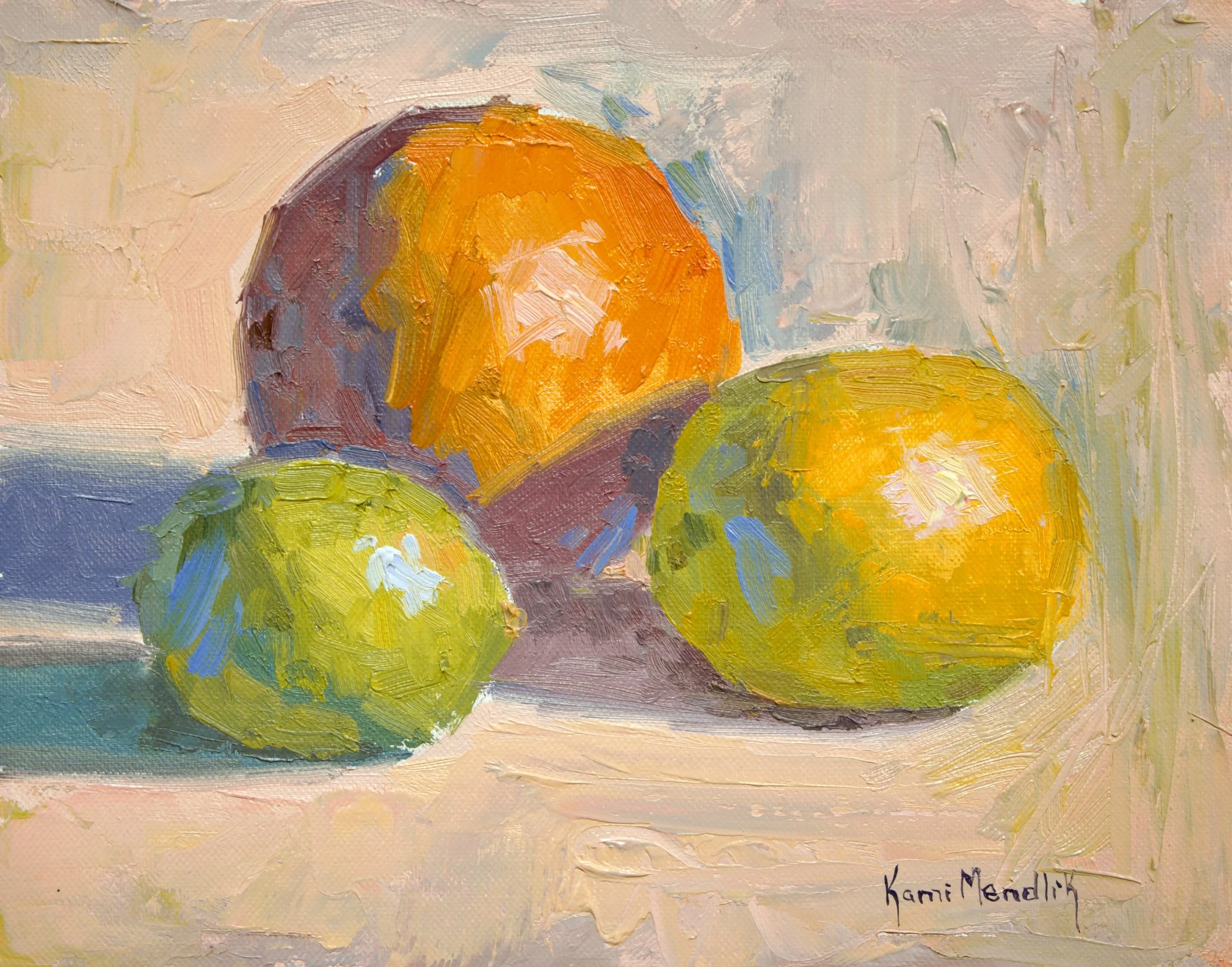
Form can be sophisticated and difficult to see at first.
Kami breaks it down into a step-by-step approach, teaching you the core properties of form and how to see them.
Central to this approach is learning to see plane changes. Plane changes reveal shifts in value and color across a form.
“Every time there’s a plane change, there’s a value and color change.”
— Kami Mendlik
Through progressive demonstrations and exercises, you’ll learn to recognize plane changes and understand how changes in value reveal three-dimensional form. Something that can initially be difficult to see becomes more understandable and approachable.
Learning to see form is also an essential foundation for learning to see color. As you begin to recognize plane changes, you begin to understand that every plane change brings a change in value and color.
Learning to see form prepares you to see and paint color with greater understanding.
Experience a Lesson from Fundamentals
See what it’s like to learn with Kami.
Step inside the course with a full sample lesson and experience Kami’s approach to teaching you how to see—not simply what to paint.
Watch the lesson below.
Want to see more?
Explore additional sample lessons from Drawing, Value & Form, and Color.
View More Sample Lessons →
The Value & Form Curriculum
Color Relativity Fundamentals: Value & Form includes the complete Value & Form portion of the Color Relativity Fundamentals Complete Course, along with the foundational Materials & Setup lessons included with every course option.
These are the same chapters and lessons included in the Complete Course, offered separately as Part Two of the Fundamentals progression.
Fundamentals is designed to be taken in order. We recommend completing Drawing before beginning Value & Form, as the observational skills established in Part One provide the foundation for understanding value, light, shadow, and form.
PART TWO · VALUE & FORM
Learn to See Light and Form
Move beyond the outline and begin seeing the structure of light. Learn to separate light from shadow, understand value relationships, and create the illusion of three-dimensional form.
Understanding Value
Learn to recognize and organize value relationships as the foundation for creating form.
Separating Light From Shadow
Learn to clearly identify the two major families of light and shadow.
Understanding Form
Explore how light moves across form and creates the illusion of three dimensions.
Halftones
Learn to recognize and control the transition of values within the light family.
Working With Value Relationships
Practice comparing values relationally rather than judging them in isolation.
Applying Value & Form
Bring the principles of light, shadow, value, and form together through guided exercises.
ONE FOUNDATION · ONE PROGRESSION
Build on the Foundation of Drawing.
Color Relativity Fundamentals is designed as a progressive approach to learning—each part building upon the understanding developed before it.
DRAWING → VALUE & FORM → COLOR
Value & Form builds upon the observational skills established in Drawing, advancing from seeing and measuring accurately to understanding value, light, shadow, and three-dimensional form.
These skills then become the foundation for Part Three: Color.
CONTINUE WITH VALUE & FORM
EXPLORE COMPLETE FUNDAMENTALS
From Understanding to Confidence
Value and form can seem complicated, particularly when a painter is eager to move directly into color.
But these fundamentals provide the structure that makes successful color possible.
By breaking the process into understandable steps, Kami teaches you what to look for, how to see it, and how to translate those observations into paint.
With practice, what once seemed mysterious becomes easier to see and understand. And what can be seen and understood can be practiced and ultimately mastered.
Understand value. Learn to see light and shadow. Master form. Paint with confidence.
Is Value & Form Right for You?
Color Relativity Fundamentals: Value & Form is designed for beginning and experienced painters who want a stronger understanding of value, light, shadow, and form.
This course is for you if you:
• Have completed Part One: Drawing and are ready to continue the Fundamentals progression
• Want a stronger understanding of value and its role in painting
• Struggle to accurately see and separate light from shadow
• Want to better understand how light reveals three-dimensional form
• Want to create a stronger illusion of light and form in your paintings
• Want to build the foundation necessary for seeing and painting color more accurately
Value & Form is Part Two of the Fundamentals progression. We recommend completing Drawing before beginning this course.

How the Course Works
Self-Paced Online Learning
Move through the lessons and exercises on your own schedule.
Two Years of Access
Return to the lectures, demonstrations, and exercises throughout your access period.
Understand · See · Paint
First develop an understanding of each principle through Kami’s lectures and demonstrations. Then learn to see those principles on actual three-dimensional objects before applying them with paint.
A Progressive Approach
The course progresses deliberately—from understanding value, to seeing light and shadow, to seeing and painting form—so that each new skill builds upon the one before it.

Choose How You Want to Continue
The Fundamentals program can be taken as individual parts or experienced as one complete progressive course.
VALUE & FORM
Part Two of Color Relativity Fundamentals
Build upon the observational foundation of Drawing as you learn to see and paint value, light, shadow, and three-dimensional form.
CONTINUE WITH VALUE & FORM
COMPLETE FUNDAMENTALS
Drawing · Value & Form · Color
Experience Kami’s complete progressive approach—from the foundations of seeing and drawing through value, light, form, and color.
RECOMMENDED FOR THE COMPLETE FUNDAMENTALS EXPERIENCE
EXPLORE COMPLETE FUNDAMENTALS
Do I need to complete Drawing before taking Value & Form?
How long will I have access to the course?
What materials will I need?
Is this the same Value & Form content included in Complete Fundamentals?
Can I take Value & Form separately and continue to Color later?
What should I take after completing Value & Form?
Will this course benefit experienced painters?
We can write the answers once we're certain about the purchase/progression mechanics.
Understand Value. See Form. Paint With Confidence.
Value & Form builds the bridge between accurate observation and color—giving you the tools to understand light, shadow, and the structure beneath a successful painting.
BEGIN VALUE & FORM
Continue the complete progression.
EXPLORE COMPLETE FUNDAMENTALS →
How the Course Works
Learn to see. Strengthen your tools. Build confidence. Paint anything.
Color Relativity Fundamentals: VALUE and FORM is a self-paced online painting course designed to be completed on your own schedule.
Your purchase includes two years of unlimited online access, allowing you to revisit the lectures, demonstrations, and exercises as often as you need during your access period.
Students first develop an understanding of the principles through Kami's lectures and demonstrations. They then learn to see those principles on actual three-dimensional objects before applying them with paint.
You'll watch Kami explain and demonstrate each principle, then practice the painting exercises yourself.
The course progresses deliberately - from understanding value, to seeing light and shadow, to seeing and painting form - so that each new skill builds upon the one before it.
Working with black and white paint allows students to concentrate on painting in values and learning to see color in value, mastering the fundamental relationships that are essential for strong color.
Color Relativity Fundamentals: VALUE is part two in Kami Mendlik's three-part Fundamentals course: Drawing, Value/ Form, and Color.
The Value & Form Curriculum
Color Relativity Fundamentals: Value & Form includes the complete Value & Form portion of the Color Relativity Fundamentals Complete Course, along with the foundational Materials & Setup lessons included with every course option.
These are the same chapters and lessons included in the Complete Course, offered separately as Part Two of the Fundamentals progression.
Fundamentals is designed to be taken in order. We recommend completing Drawing before beginning Value & Form, as the observational skills established in Part One provide the foundation for understanding value, light, shadow, and form.
MATERIALS & SETUP
Included with every course option.
Introduction — An introduction to the Fundamentals course and Kami’s approach to learning.
Supplies — Learn about the essential materials used throughout the course.
Drawing & Painting Surfaces — Understand the surfaces used for the drawing and painting exercises.
Lighting & Setting Up — Learn how to create an effective setup for observing and working from life.
Props — Learn how to select and arrange subjects for the exercises throughout the course.
PART TWO · VALUE & FORM
CHAPTER 4 · VALUES
Understanding Values — Understand the essential role value plays in creating the illusion of light and providing the underlying structure of a painting.
The Two Types of Halftone — Learn to recognize the two types of halftone and understand their role in seeing accurate values and creating form.
9-Point Value Scale — Train your eye to recognize and compare the progression of values from light to dark.
CHAPTER 5 · PROPERTIES OF LIGHT & SHADOW
Learning to See Light & Shadow — Learn to clearly recognize and separate light from shadow on a three-dimensional form.
Painting Values on a Cube — Identify and translate the values of light and shadow into paint using a simple cube.
Painting Values on a Cup — Learn to recognize and paint how value changes across a rounded form.
CHAPTER 6 · FORM
Properties of Form & Light — Understand how the properties of light move across an object to reveal three-dimensional form.
Form-Revealing Halftone & Core of the Shadow — Learn to identify and paint light, shadow, halftone, and the core of the shadow to create the illusion of form.
Building on Form — Deepen your understanding of how value, light, and shadow work together to create three-dimensional form.
Reflected Light — Learn to recognize and paint reflected light and understand its role within the shadow.
Value Is the Foundation of a Painting
It is easy to become excited about color and overlook one of the most important foundations of painting: value.
Value is referring to the range of light to dark and is also a property of color.
As I often tell my students, creating the illusion of light relies on achieving accurate values in your paintings.
Value gives color its carrying power. Underneath every successful painting that represents light and color is a strong structure of value.
In Fundamentals: Value and Form, students begin by developing an understanding of value and learning to work with a nine-point value scale. From there, they learn the properties of light and shadow, learning to see and paint accurate value relationships. One of the essential keys to this understanding is learning to see the two types of halftone - a concept that is vital for creating accurate values in color and for creating the illusion of form.
With this foundation in place, students advance into form, learning to see and create the illusion of three-dimensional form on a two-dimensional surface.
Learning to See Form
Form can be sophisticated and difficult to see at first. Kami breaks it down into a step-by-step approach, teaching students the core properties of form and how to see them.
Central to this approach is learning to see plane changes. Plane changes reveal shifts in value and color across a form.
"Every time there's a plane change, there's a value and color change."
- Kami Mendlik
In the chapter on form, students learn to see plane changes and how changes in value reveal the form. Through progressive demonstrations and exercises, something that can initially be difficult to see becomes more understandable and approachable.
Learning to see form is also an essential foundation for learning to see color. As students learn to see plane changes, they begin to understand that every plane change brings a change in value and color. This prepares them for the next course in the Color Relativity Fundamentals series: Color
"The beginnings and ends of shadow lie between the light and darkness and may be infinitely diminished and infinitely increased. Shadow is the means by which bodies display their form. The forms of bodies could not be understood in detail but for shadow."
- Leonardo da Vinci
Learn the strategy for seeing shapes of color.
What You'll Learn
· Understanding value: Learn why value is the underlying structure of a painting and essential to creating the illusion of light.
· The nine-point value scale: Learn to see and work with a range of values from light to dark.
· The two types of halftone: Understand this vital distinction and how it relates to accurate values in color and the illusion of form.
· Learning to see light and shadow: Develop your ability to see these relationships on three-dimensional objects.
· Seeing form: Learn to see form through plane changes and shifts in value.
· Painting form: Progress from understanding light and shadow to creating the illusion of three-dimensional form.
· Reflected light: Advance into one of the more sophisticated properties of light.
Who Is This Course For?
Color Relativity Fundamentals: VALUE and FORM is designed for the beginning artist as well as the experienced painter who wants a stronger understanding of value, light, shadow, and form.
It is an approachable yet comprehensive course designed to give students a foundation they can carry forward into their study of color and into their own paintings.
Color Relativity Fundamentals: VALUE and FORM is part two in Kami Mendlik's three-part Fundamentals program: Drawing, Value and Form, and Color. VALUE and FORM is for anyone who has already taken Part 1: DRAWING.
From Understanding to Confidence
Value and form can seem complicated, particularly when a painter is eager to move directly into color. But these fundamentals provide the structure that makes successful color possible.
By breaking the process into understandable steps, students learn what to look for, how to see it, and how to translate those observations into paint.
With practice, what once seemed mysterious becomes easier to see and understand. And what can be seen and understood can be practiced and ultimately mastered.
Understand value. Learn to see light and shadow. Master form. Paint with confidence.