



A comprehensive self-paced online painting course in drawing, value, form, and color with Impressionist painter Kami Mendlik
Learn to see. Strengthen your tools. Build your confidence. Paint anything.
10 Chapters · 21 Guided Exercises · 7.5+ Hours of Instruction
A Foundation for Better Painting
Color Relativity Fundamentals is a progressive course designed to teach you not simply how to paint a particular subject, but how to see.
Beginning with drawing and moving through value, light, form, and ultimately color, each lesson builds upon the last—giving you a clear, repeatable approach you can apply to any subject you choose to paint.
The goal isn't to teach you what to paint. It's to give you the tools to understand what you see.
FUNDAMENTALS is for you if…
You’re new to painting and want to build a strong foundation from the beginning.
You’ve been painting for years but want to strengthen your drawing, value, form, or color.
You want to understand why a painting works rather than simply follow along with a demonstration.
You want a clear, repeatable process instead of relying on guesswork.
ONE FOUNDATION · ONE PROGRESSION
One Progressive Approach to Painting
Color Relativity Fundamentals is designed as a progressive approach to learning—each part building upon the understanding developed before it.
DRAWING → VALUE & FORM → COLOR
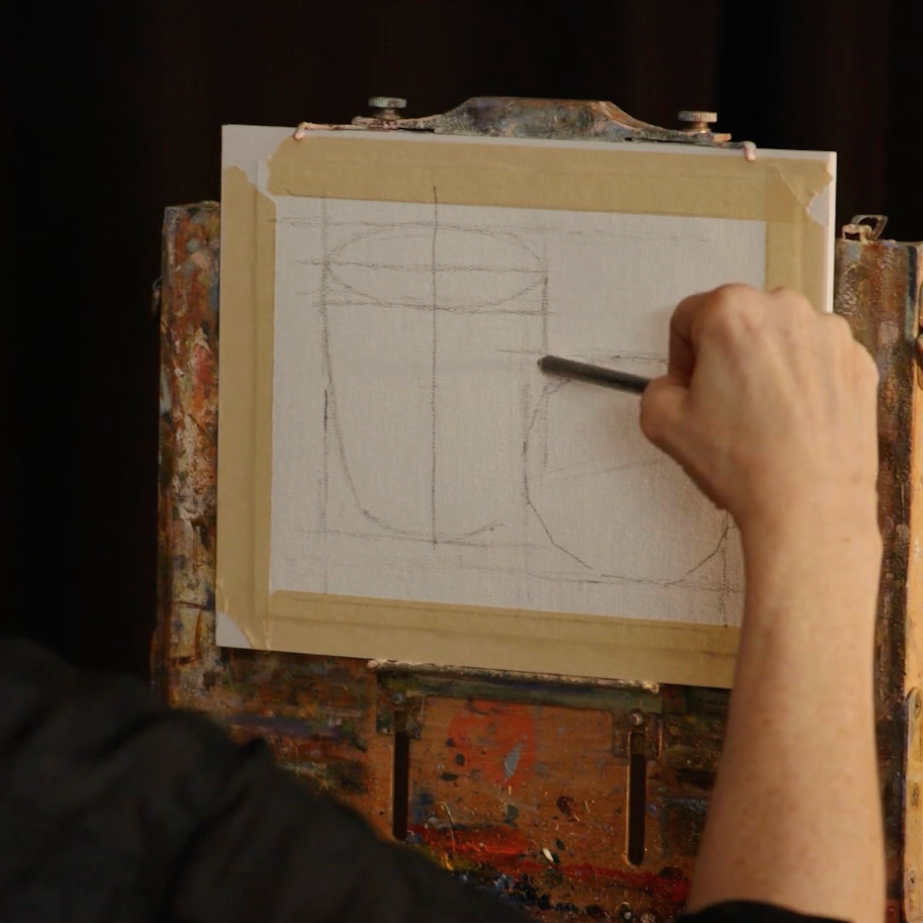
PART 1 · DRAWING
Learn to see, measure, and understand the relationships that create accurate structure.
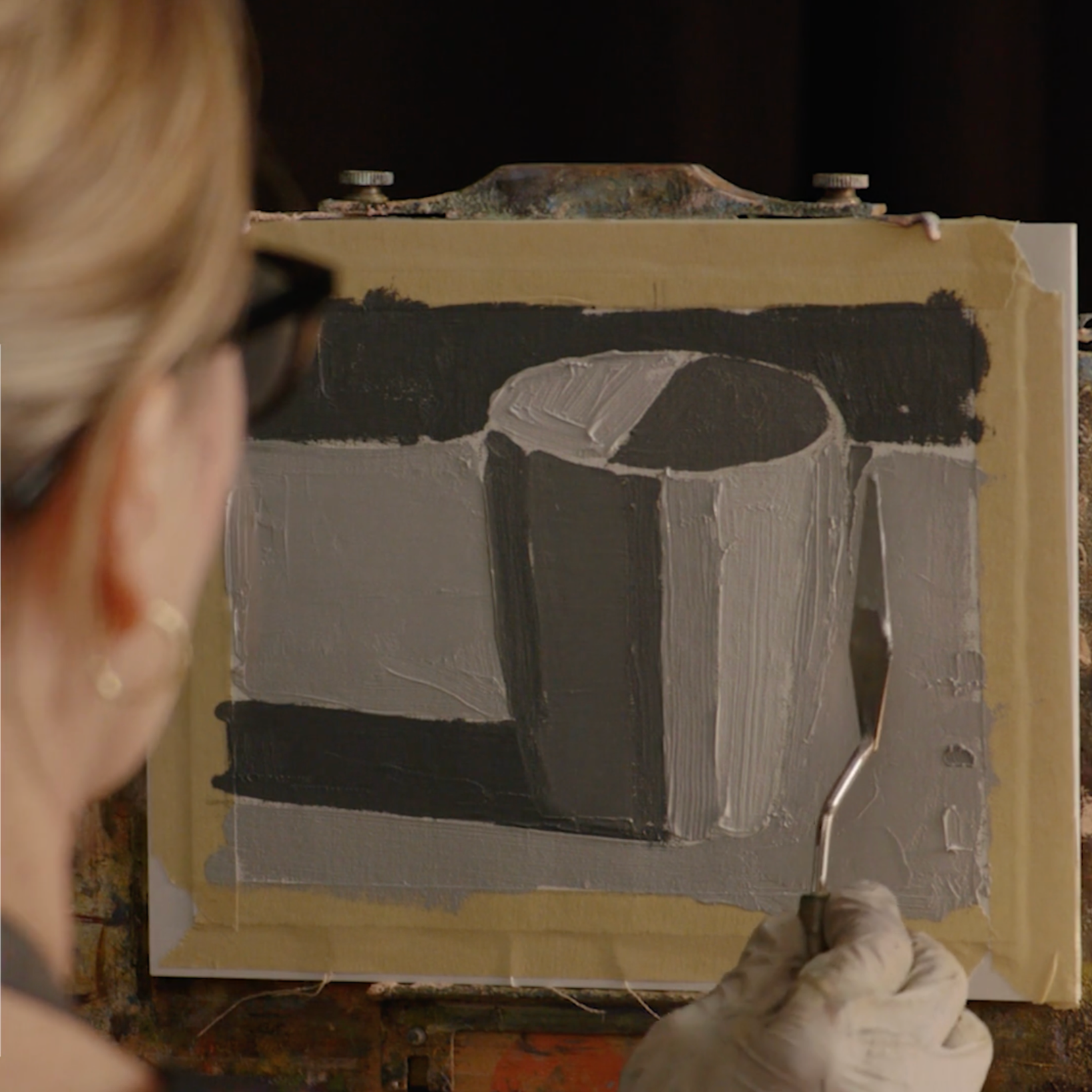
PART 2 · VALUE & FORM
Learn to see value, understand light and shadow, and recognize how light reveals three-dimensional form.
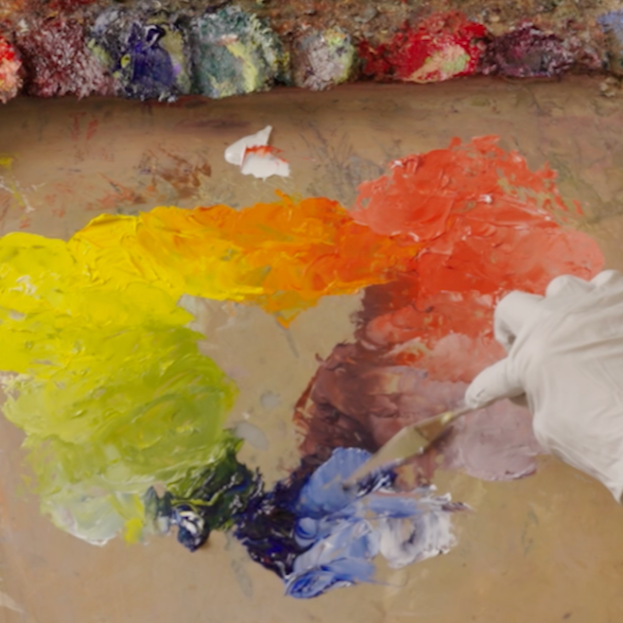
PART 3 · COLOR
Build upon those foundations to understand color relationships and develop a methodical approach to mixing color.
One progressive curriculum. Each lesson builds upon the skills developed before it.
What You'll Learn
By completing Color Relativity FUNDAMENTALS, you’ll develop a comprehensive foundation in drawing, value, form, and color—learning not only what to look for, but how to see it.
SEE & MEASURE
Learn to observe and accurately translate what is in front of you. Develop a practical approach to comparing height to width, establishing scale and proportion, seeing perspective, dropping angles, and understanding symmetry, ellipses, and spatial relationships.
The goal is not simply to draw a particular object, but to develop a measuring strategy you can apply to anything you choose to paint.
UNDERSTAND VALUE
Learn to see value as a relationship and understand its essential role in creating the illusion of light. Develop your ability to compare, organize, and simplify values using a 9-point value scale and learn to recognize the two different types of halftone.
Value becomes a tool for understanding what the light is doing—not simply whether something is light or dark.
SEE LIGHT & FORM
Learn to separate light from shadow and understand how light reveals three-dimensional form. Recognize plane changes, form-revealing halftone, the core of the shadow, reflected light, and the relationships that allow a flat shape to read as form.
Learn to look for the evidence of form rather than relying on what you think an object should look like.
UNDERSTAND COLOR
Learn to identify and compare the four properties of color—hue, value, temperature, and saturation—and understand that color cannot be judged in isolation.
Through the principles of Color Relativity, learn to see how one color is affected by the colors around it and begin making color decisions through comparison and relationship.
MIX COLOR WITH A STRATEGY
Move beyond guessing at color. Learn to work with the Primary Limited Palette and use Kami's Two Colors per Average and Lighter–Darker, Cooler–Warmer strategies to methodically identify, compare, and mix the colors you see.
Progress into tertiary color, neutralization, and the subtleties of color relationships while developing a repeatable process you can return to again and again.
BRING IT ALL TOGETHER
Drawing, value, form, light, and color are not separate problems—they work together.
Throughout Fundamentals, each skill builds upon the one before it until you bring the complete process together in a finished painting from life.
The goal is to leave with more than a finished exercise—to develop the tools, understanding, and confidence to approach whatever you choose to paint.
Where It All Comes Together
Everything you learn throughout Fundamentals is building toward one goal: bringing drawing, value, form, light, and color together in a finished painting from life.
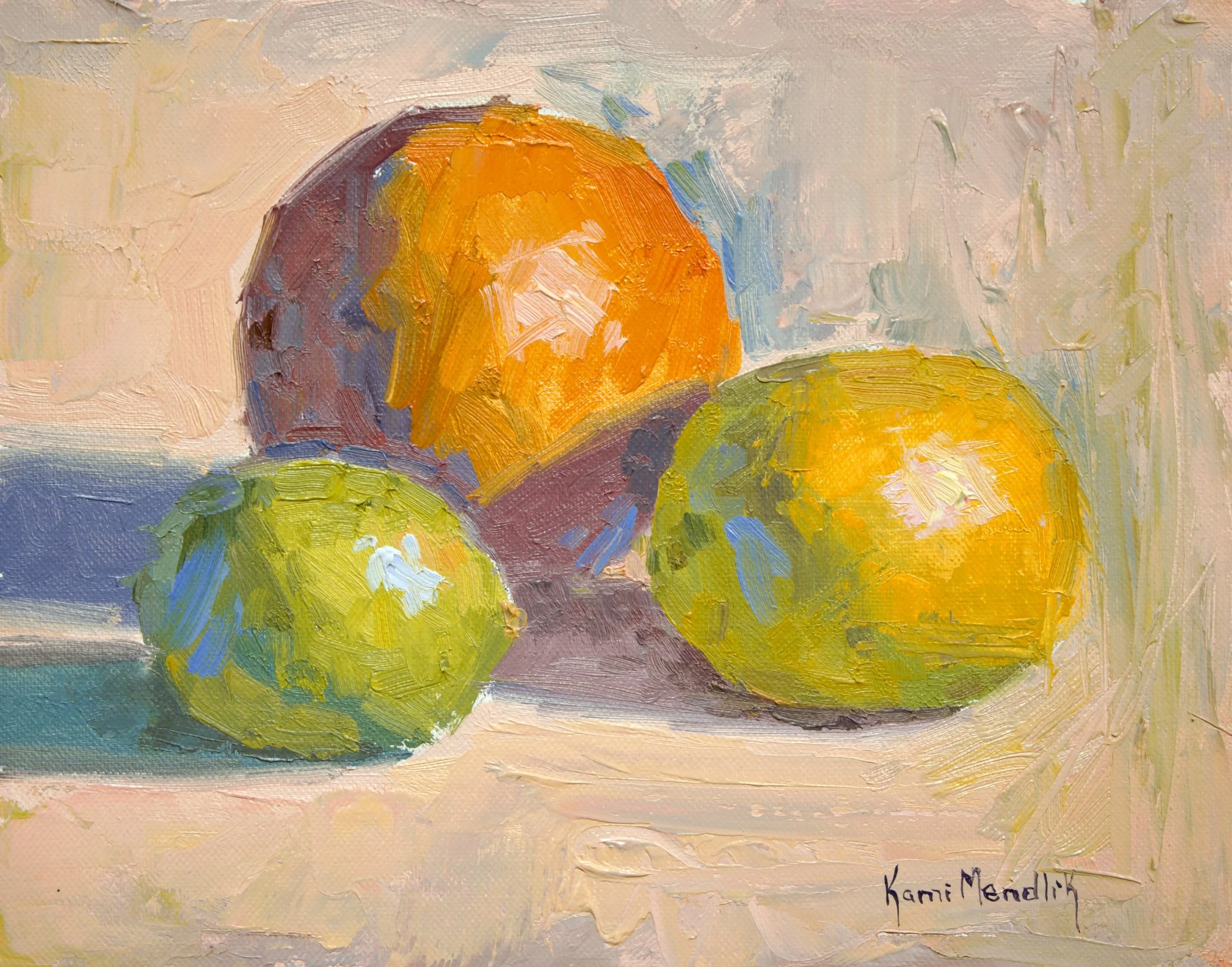
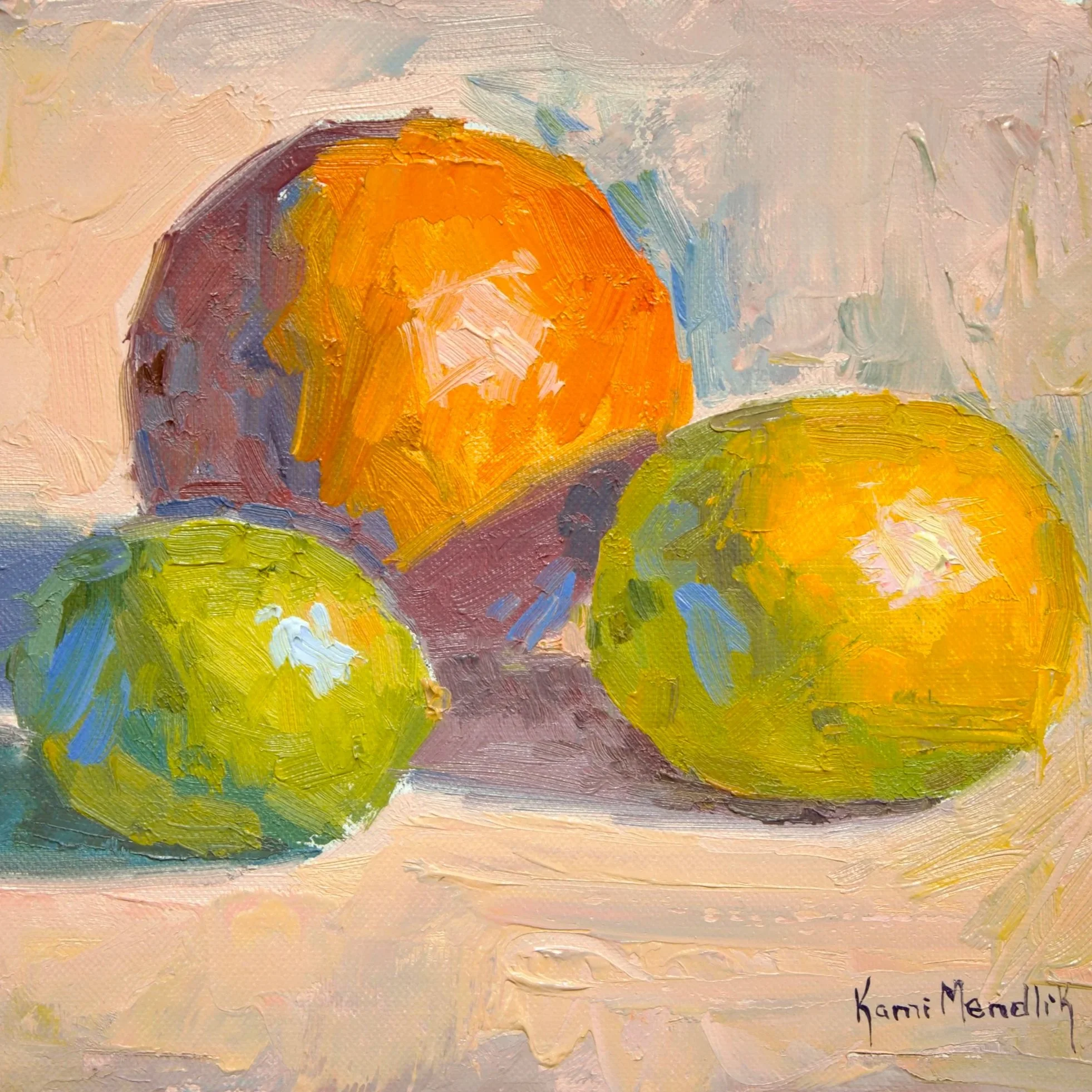
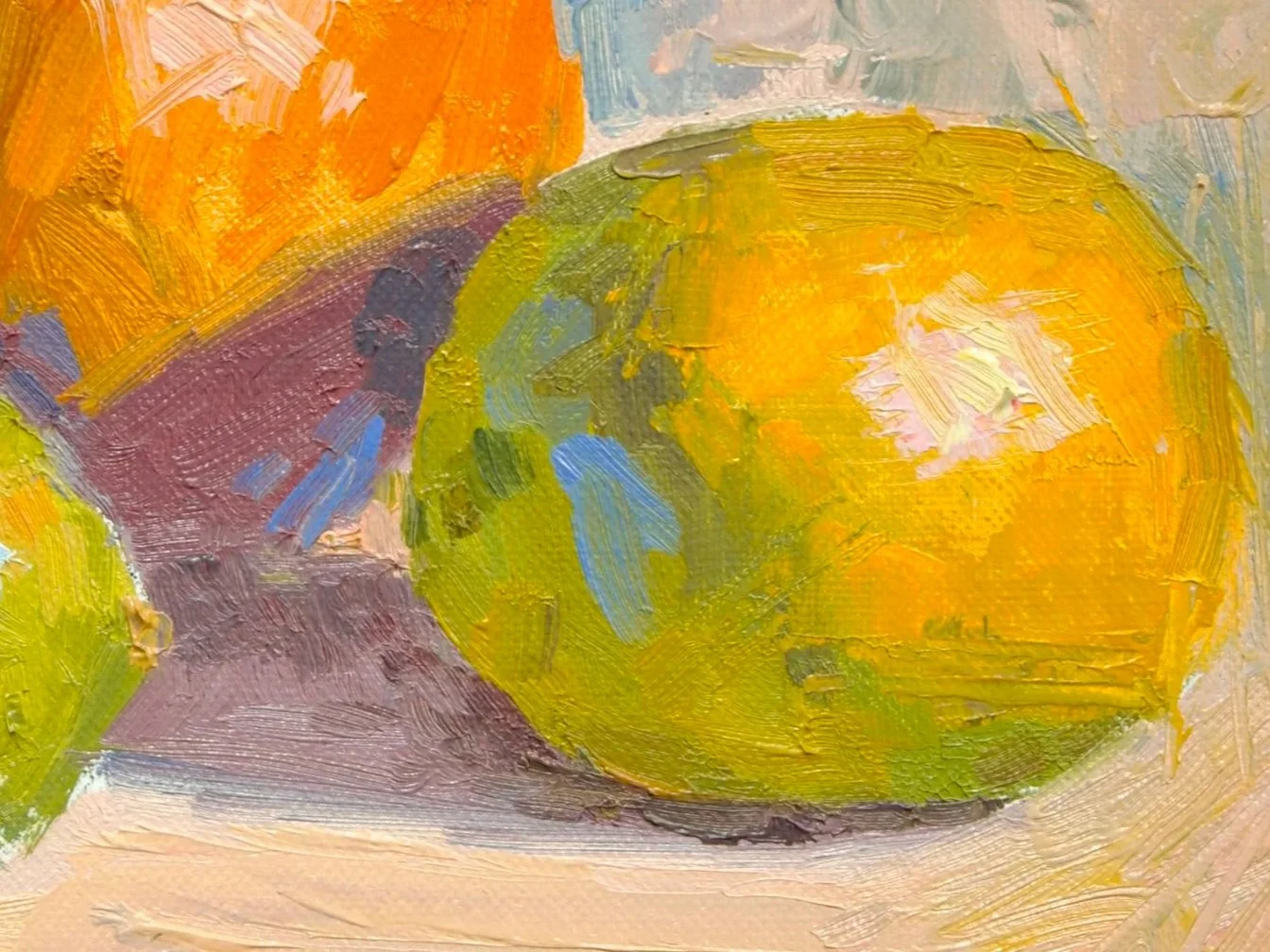
At the end of the course, you’ll put the full Fundamentals process into practice with a still life of a lemon, lime, and orange.
From establishing an accurate drawing and understanding the form, to seeing value relationships, mixing color, and creating the illusion of light—you’ll apply the tools and strategies developed throughout the course from start to finish.
You won’t just finish Fundamentals with new information. You’ll finish with the tools to take a subject from life and build a complete painting from what you see.
Experience a Lesson from Fundamentals
See what it’s like to learn with Kami.
Step inside the course with a full sample lesson and experience Kami’s approach to teaching you how to see—not simply what to paint.
Watch the lesson below.
Choose How to Take Fundamentals
One complete curriculum. Two ways to begin.
BEST VALUE
COMPLETE FUNDAMENTALS
10 Chapters · 21 Guided Exercises · 7.5+ Hours · 2 Years of Access
Drawing + Value & Form + Color
Get the entire ten-chapter Fundamentals curriculum and follow Kami's progressive approach from beginning to end.
Save $60 compared with purchasing all three parts individually.
TAKE FUNDAMENTALS IN 3 PARTS
PART 1 · DRAWING
Build the observational and measuring skills that create the foundation for successful painting.
$125
EXPLORE DRAWING →
PART 2 · VALUE & FORM
Learn to organize values, understand light and shadow, and create the illusion of three-dimensional form.
$235
EXPLORE VALUE & FORM →
PART 3 · COLOR
Build upon Drawing and Value & Form to understand color relationships and mix color with greater confidence.
$325
EXPLORE COLOR →
-
CHAPTER 1 · INTRODUCTION
An introduction to Color Relativity Fundamentals and Kami’s progressive approach to learning how to see.
CHAPTER 2 · GETTING STARTED
Prepare for the course with the materials, surfaces, lighting, and setup needed for the exercises ahead.
Supplies · Drawing & Painting Surfaces · Lighting & Setup · Choosing Props
-
CHAPTER 3 · DRAWING
Build a practical, repeatable approach to seeing, measuring, and accurately translating what is in front of you.
Observation · Scale & Proportion · Perspective · Ellipses · Symmetry · Center Line of Gravity · Multiple-Object Compositions · Drawing for Painting
Explore Drawing →
-
CHAPTER 4 · VALUES
Learn to see, compare, and organize value relationships as the foundation for understanding light.
Understanding Value · The 9-Point Value Scale · The Two Types of Halftone
CHAPTER 5 · PROPERTIES OF LIGHT & SHADOW
Learn to separate light from shadow and understand how value relationships create the illusion of light.
Seeing Light & Shadow · Painting Values on a Cube · Painting Values on a Cup
CHAPTER 6 · FORM
Understand how light reveals three-dimensional form and learn to recognize the value relationships that describe it.
Properties of Form & Light · Form-Revealing Halftone · Core of the Shadow · Reflected Light
Explore Value & Form →
-
CHAPTER 7 · PROPERTIES OF COLOR
Develop an understanding of the four properties of color and begin working with a limited palette.
Hue · Value · Temperature · Saturation · Primary Limited Palette
CHAPTER 8 · STRATEGIZING COLOR RELATIVITY
Learn a systematic approach to seeing, comparing, and mixing colors through their relationships.
Two Colors per Average · Lighter–Darker, Cooler–Warmer · Comparing Color Relationships
CHAPTER 9 · BUILDING FORM WITH COLOR
Apply color relationships to three-dimensional form, bringing together the principles of value, light, and color.
Form-Revealing Color · Halftone · Light & Shadow · Multiple-Object Studies
CHAPTER 10 · TERTIARIES
Advance into tertiary color and bring the complete Fundamentals process together in a finished painting from life.
Understanding Tertiaries · Mixing & Neutralizing Color · Complete Citrus Still Life · Applying the Fundamentals
Explore Color →
The Complete 10-Chapter Curriculum
Color Relativity Fundamentals is one comprehensive, ten-chapter program designed to build your understanding step by step—from the first principles of seeing and drawing through value, light, form, and color.
10 Chapters · 21 Guided Exercises · 7.5+ Hours · 2 Years of Access
DRAWING → VALUE & FORM → COLOR

Learn from Life. Paint Anything.
Throughout Color Relativity Fundamentals, you'll learn through observation, instruction, demonstrations, and exercises practiced from life.
Simple still-life subjects provide the training ground. By removing unnecessary complexity, you can focus on understanding and practicing one fundamental at a time.
The exercises are not the destination.
The tools and strategies you develop are meant to be carried into whatever you want to paint—landscapes, portraits, still lifes, interiors, and beyond.
The subject may change. The fundamentals go with you.
From COLOR RELATIVITY the Book to the FUNDAMENTALS Course
Fundamentals builds upon those principles and takes them further. Through step-by-step instruction, students can watch Kami demonstrate the concepts, see them applied, and practice each exercise themselves. The course also moves more deeply into color, including tertiary color and nuances beyond what could be covered in the book.
The book and course complement one another, but each stands completely on its own. For readers of Color Relativity, Fundamentals offers an opportunity to take that understanding further through guided practice.

-
Color Relativity Fundamentals is for painters who want to strengthen the way they see and build a deeper understanding of drawing, value, form, light, and color.
Whether you're building these skills for the first time or returning to the fundamentals with years of painting experience, the course provides a clear, progressive approach you can apply to whatever you choose to paint.
-
Fundamentals Are NOT Just for Beginners!
The word fundamentals can sometimes sound like it means beginner.
It doesn't.
These are foundations a beginning painter needs, but they are also foundations an experienced painter can continue strengthening throughout a lifetime.
If you've been painting for years but feel your work isn't progressing in the way you want, returning to the fundamentals can help reveal areas that may be limiting your work.
As your ability to see becomes more sophisticated, your understanding of these fundamentals continues to grow.
The fundamentals are the foundation on which mastery is built.
-
No! The concepts of fundamentals are not only applicable to oil painting. Although Kami uses oil paints, she has several students who use acrylic, water-based oils, pastel, gouache, and watercolor. The medium is your choice. Studying the fundamentals will arm you with the tools to paint anything you desire without limits and without fear!
-
You’ll have access to your course for two years from the date of purchase, giving you plenty of time to work through the material, practice, and revisit lessons.
-
That’s entirely up to you. Fundamentals is designed to be worked through at your own pace.
We encourage you to take your time, practice the exercises, and become comfortable with each concept before moving forward. There is no benefit to rushing—the lessons are designed to build upon one another.
-
Yes. The course is completely self-paced, with no required meeting times or deadlines. You can move through the lessons on a schedule that works for you.
-
Absolutely—and we encourage it. You can return to previous lessons and exercises as often as you’d like throughout your access period.
As your understanding develops, you may find that revisiting earlier lessons allows you to see and understand them in an entirely new way.
Frequently Asked Questions
10 Chapters · 21 Guided Exercises · 7.5+ Hours · 2 Years of Access
Get the entire ten-chapter Fundamentals curriculum and follow Kami's progressive approach from beginning to end.
Save $60 compared with purchasing all three parts individually.