

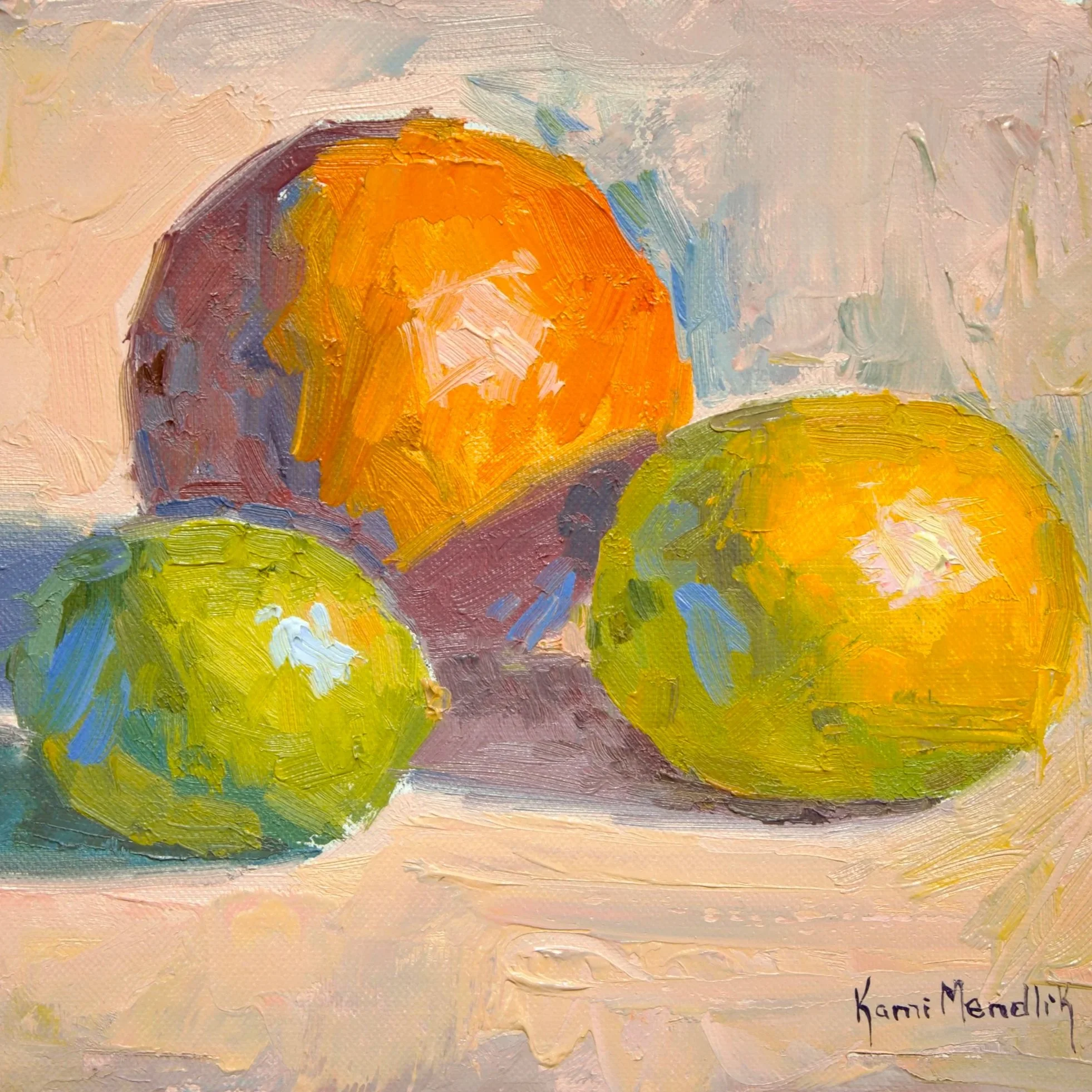
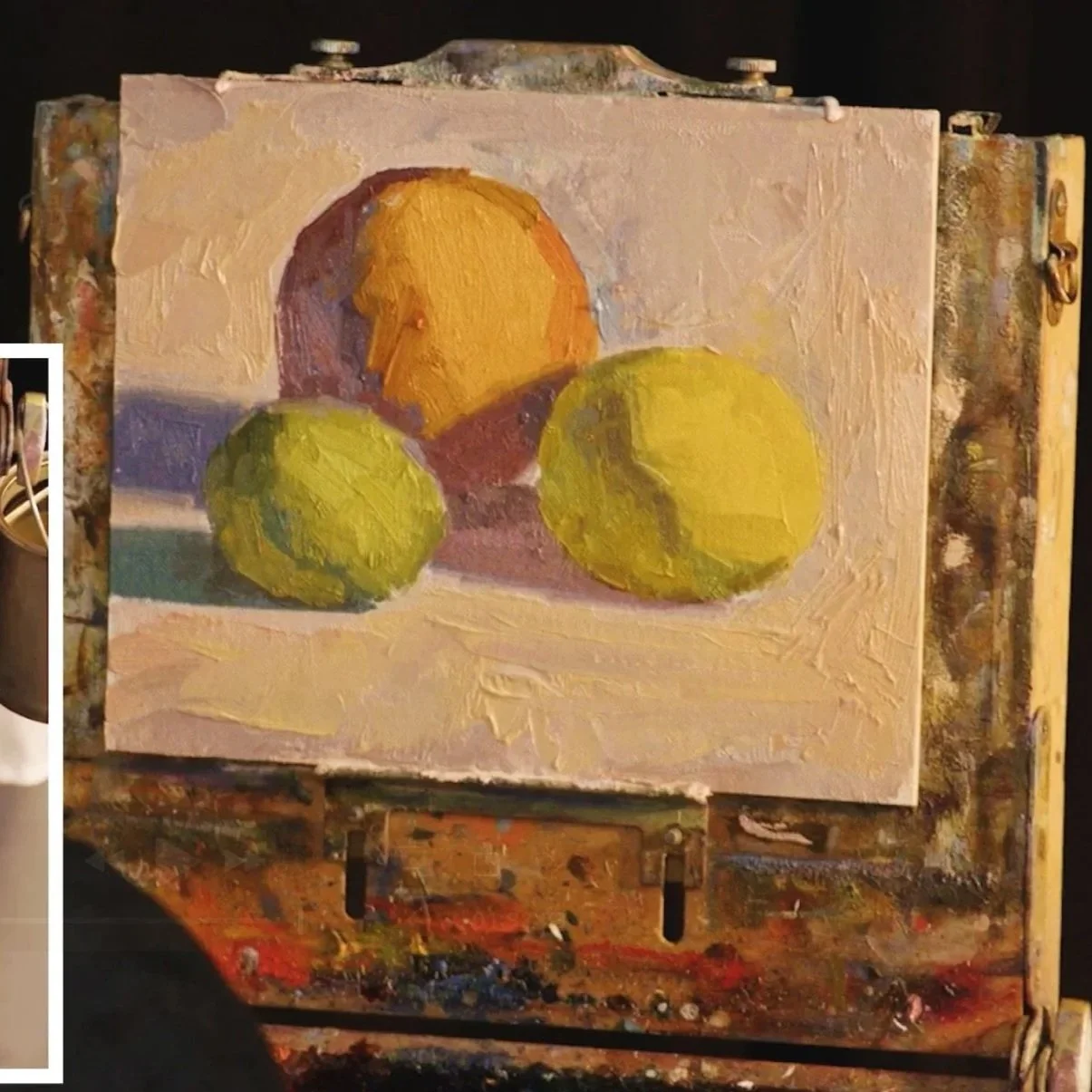

A Comprehensive, Self-Paced Online Painting Course
Learn to see. Strengthen your tools. Build your confidence. Paint anything.
BEGIN COLOR
WATCH COURSE PREVIEW
Color Is Relative.
Color does not exist in isolation. Every color is understood in relationship to the colors around it.
A color may appear warmer or cooler, lighter or darker, more or less saturated depending on what it is compared to.
Learning to paint color successfully begins with learning to see these relationships.
In Color Relativity Fundamentals: Color, Kami teaches you to understand color through its four properties—hue, value, temperature, and saturation—and use those properties to more accurately identify, mix, and paint the colors you see.
Building upon the principles of Drawing, Value, and Form, you’ll learn to move beyond simply naming colors and begin seeing how colors relate to one another.
The goal is not simply to mix the right color. It is to understand the relationships that create the illusion of light.
What You'll Learn
By completing Color Relativity FUNDAMENTALS: Color, you’ll develop a strong foundation in color and color relationships—learning not only what to look for, but how to see, compare, mix, and paint the color relationships in front of you.
COLOR
The properties of color: Learn to see and understand hue, value, temperature, and saturation—and the range within each.
Color Relativity: Learn to see color through relationships, comparing one color to another rather than judging colors in isolation.
The Primary Limited Palette: Develop a controlled approach to mixing color while strengthening your understanding of color relationships.
Two Colors per Average: Practice identifying and mixing the essential color relationships within your subject.
Lighter–Darker, Cooler–Warmer: Use Kami’s Color Mantra as a practical strategy for comparing, mixing, and adjusting color.
Temperature & saturation: Learn to recognize and control subtle shifts in temperature and intensity.
Building form with color: Combine value, temperature, saturation, halftone, and plane changes to create three-dimensional form.
Advanced color relationships: Progress into more sophisticated mixtures and tertiary relationships while maintaining control of value and temperature.
Creating the illusion of light: Bring color relationships together to create vibration, form, and the illusion of light.
Learning to See Color
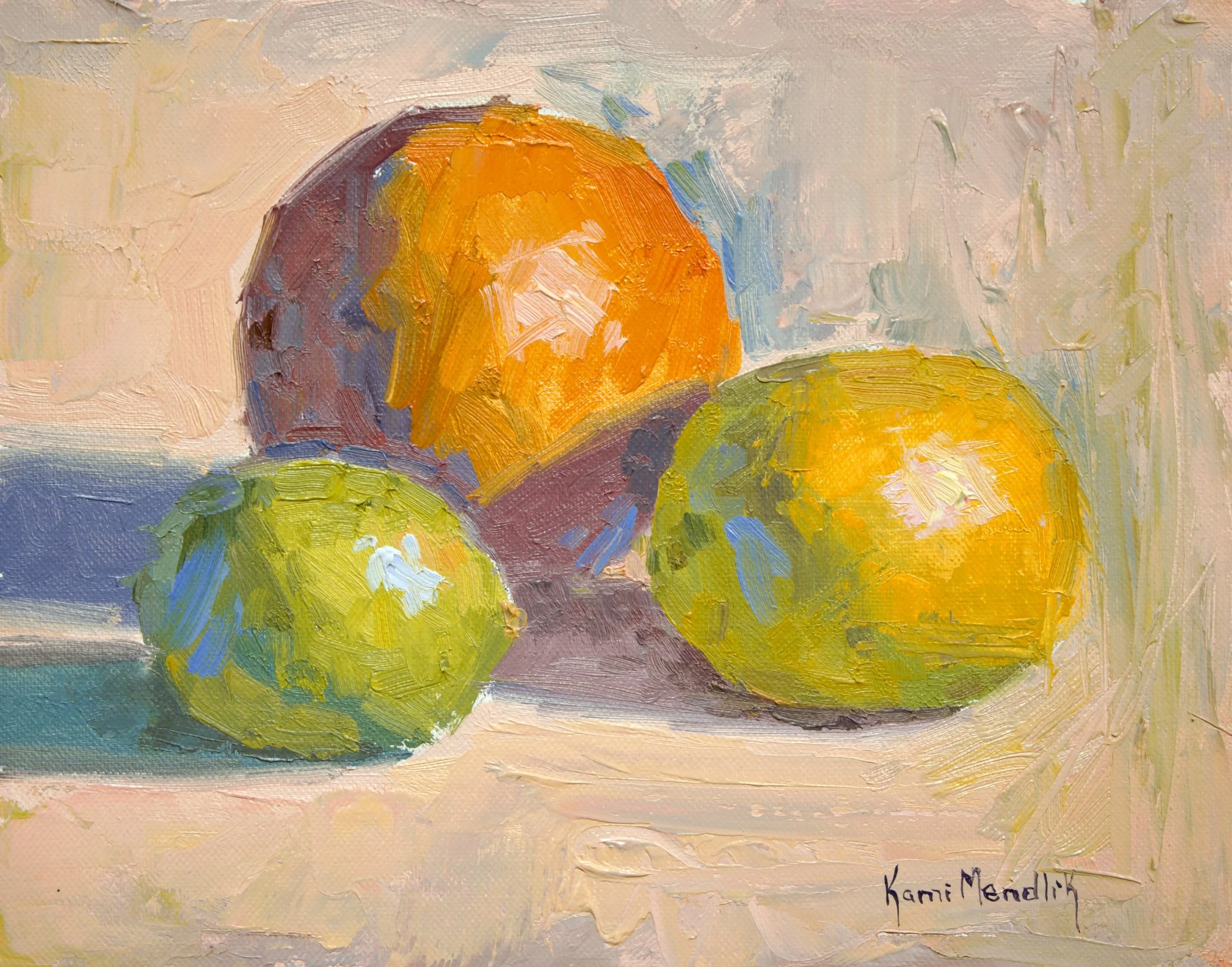
Learning to paint color begins with learning how to see it.
It can be tempting to identify colors by name—a red apple, a green leaf, a yellow lemon. But the color we perceive is influenced by the light, the surrounding colors, and the relationships within the subject.
Kami teaches you to move beyond naming color and instead evaluate it through its four properties: hue, value, temperature, and saturation.
Rather than asking, “What color is this?” you begin to ask:
Is it warmer or cooler?
Lighter or darker?
More or less saturated?
How does it compare to the color beside it?
These comparisons give you a practical way to identify and mix the colors you see.
As your understanding develops, color becomes less about finding a single correct mixture and more about recognizing the relationships that exist across the entire subject.
You are not simply learning how to mix color. You are learning how to see color.
Experience a Lesson from Fundamentals
See what it’s like to learn with Kami.
Step inside the course with a full sample lesson and experience Kami’s approach to teaching you how to see—not simply what to paint.
Watch the lesson below.
Want to see more?
Explore the Complete FUNDAMENTALS course and watch additional sample lessons from Drawing, Value & Form, and Color →
The Color Curriculum
Color Relativity Fundamentals: Color includes the complete Color portion of the Color Relativity Fundamentals Complete Course, along with the foundational Materials & Setup lessons included with every course option.
These are the same chapters and lessons included in the Complete Course, offered separately as Part Three of the Fundamentals progression.
Fundamentals is designed to be taken in order. We recommend completing Drawing and Value & Form before beginning Color, as the understanding developed in Parts One and Two provides the foundation for learning to see and paint color relationships.
PART THREE · COLOR
Learn to See Color Relationally
Bring drawing, value, and form together through color. Learn to see color relationally through hue, value, temperature, and saturation—and use those relationships to create the illusion of light.
Introduction to Color Relativity
Learn why color must be understood in relationship to the colors surrounding it.
The Four Properties of Color
Develop an understanding of hue, value, temperature, and saturation.
Hue
Learn to identify and compare colors by their hue relationships.
Value
Understand the critical role value plays within color.
Temperature
Learn to see and compare warm and cool relationships.
Saturation
Explore the intensity of color and how saturation changes through relationships.
Seeing Color Relationally
Practice comparing colors rather than trying to identify them independently.
Creating the Illusion of Light With Color
Bring the properties of color together to create convincing light and atmosphere.
ONE FOUNDATION · ONE PROGRESSION
Bring the Fundamentals Together.
Color Relativity Fundamentals is designed as a progressive approach to learning—each part building upon the understanding developed before it.
DRAWING → VALUE & FORM → COLOR
Drawing develops your ability to see and measure accurately.
Value & Form builds upon those observational skills as you learn to understand value, light, shadow, and three-dimensional form.
Color brings these foundations together as you learn to see and paint the relationships of hue, value, temperature, and saturation.
Color is Part Three—the culmination of the Fundamentals progression.
CONTINUE WITH COLOR
EXPLORE COMPLETE FUNDAMENTALS
From Understanding to Confidence
Color can feel overwhelming when you don’t know what you’re looking for.
With seemingly endless possibilities on the palette, it can be difficult to know where to begin—or why a mixture that looks right on its own doesn’t work once it is placed in a painting.
Kami’s approach gives you a framework.
By learning to evaluate color through hue, value, temperature, and saturation, you begin to understand what you are seeing and make more intentional decisions about how to mix it.
With practice, color becomes less mysterious. Your eye becomes more sensitive to relationships, your mixtures become more intentional, and you gain greater confidence in what you see.
Understand color. See relationships. Mix with intention. Paint with confidence.
Is Color Right for You?
Color Relativity Fundamentals: Color is designed for painters who want a stronger understanding of how to see, mix, and use color in relationship.
This course is for you if you:
• Have completed Drawing and Value & Form and are ready to complete the Fundamentals progression
• Feel overwhelmed or uncertain when mixing color
• Struggle to identify why a color mixture isn’t working
• Want to better understand hue, value, temperature, and saturation
• Want to see color relationships more accurately
• Want to create a stronger illusion of light through color
• Are an experienced painter who wants to deepen and strengthen your understanding of color
Color is Part Three of the Fundamentals progression. We recommend completing Drawing and Value & Form before beginning this course.
How the Course Works
Self-Paced Online Learning
Move through the lessons and exercises on your own schedule.
Two Years of Access
Return to the lectures, demonstrations, and exercises throughout your access period.
Understand · See · Mix · Paint
Develop an understanding of each color principle, learn to recognize it from life, practice translating what you see through color mixing, and ultimately apply those relationships to painting.
A Progressive Approach
Each lesson builds intentionally upon the understanding developed before it—moving from the properties of color through mixing and comparison to increasingly sophisticated color relationships.
MEET YOUR INSTRUCTOR
Learn With Kami Mendlik
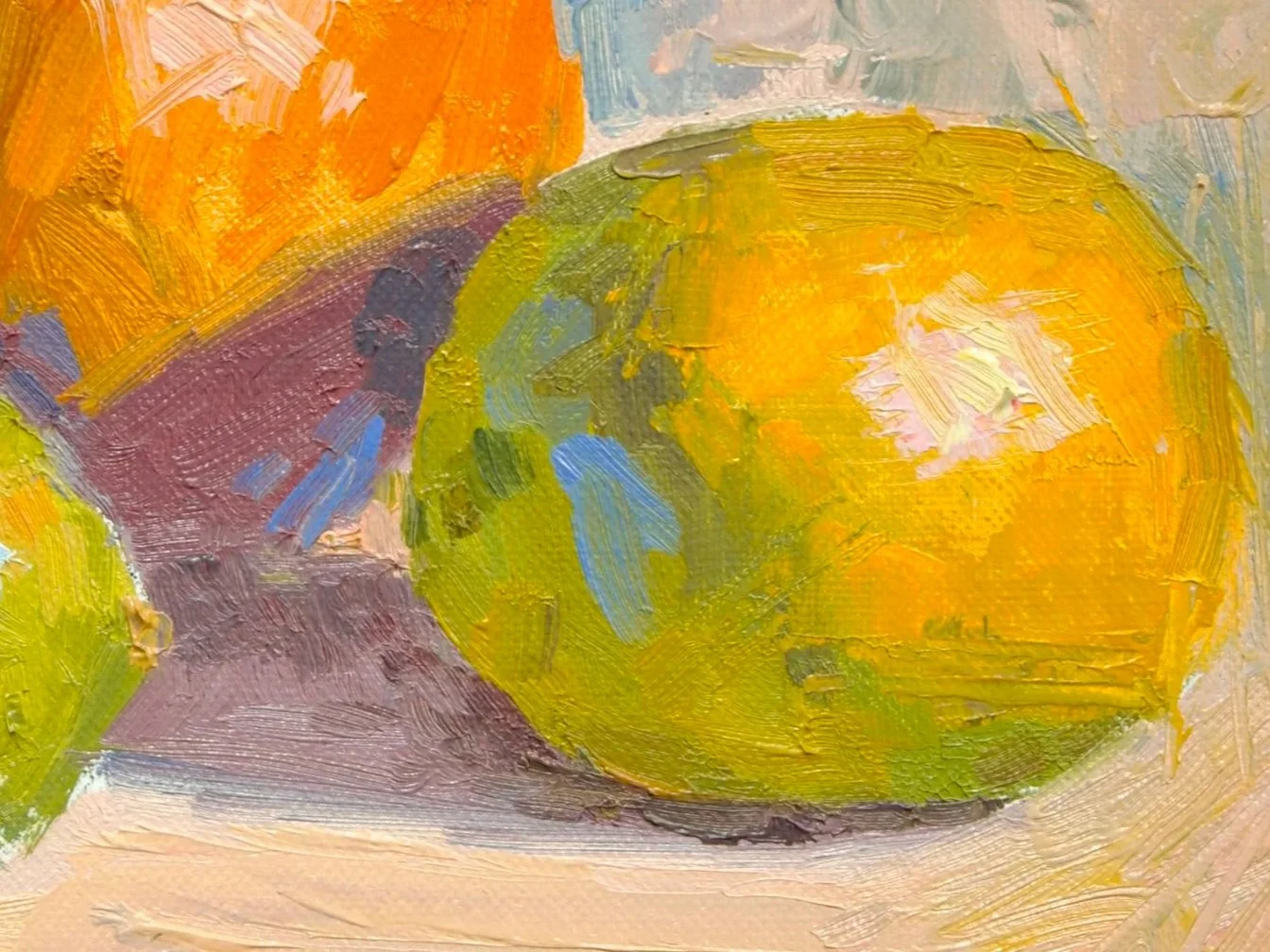
American Impressionist painter, author, and educator Kami Mendlik has spent decades studying the relationship between drawing, value, light, form, and color.
Her teaching is grounded in the belief that painting begins with learning how to see. Rather than teaching students to simply copy what she does, Kami breaks complex visual concepts into understandable principles that artists can observe, practice, and apply to their own work.
Color Relativity Fundamentals brings that progressive teaching approach together in a comprehensive online program designed to give artists the understanding and tools to continue growing independently.

Choose How You Want to Continue
The Fundamentals program can be taken as individual parts or experienced as one complete progressive course.
COLOR
Part Three of Color Relativity Fundamentals
Build upon Drawing and Value & Form as you learn to see, mix, and paint color relationships with greater understanding and confidence.
CONTINUE WITH COLOR
COMPLETE FUNDAMENTALS
Drawing · Value & Form · Color
Experience Kami’s complete progressive approach—from the foundations of seeing and drawing through value, light, form, and color.
RECOMMENDED FOR THE COMPLETE FUNDAMENTALS EXPERIENCE
EXPLORE COMPLETE FUNDAMENTALS
Frequently Asked Questions
-
That’s entirely up to you. Fundamentals is designed to be worked through at your own pace.
We encourage you to take your time, practice the exercises, and become comfortable with each concept before moving forward. There is no benefit to rushing—the lessons are designed to build upon one another.
-
Item description
-
Item description
-
Item description
-
Item description
See Color. Understand Relationships. Paint With Confidence.
Bring the Fundamentals together as you learn to see, mix, and paint color relationships that create the illusion of light.
BEGIN COLOR
Experience the complete progression.
EXPLORE COMPLETE FUNDAMENTALS →